
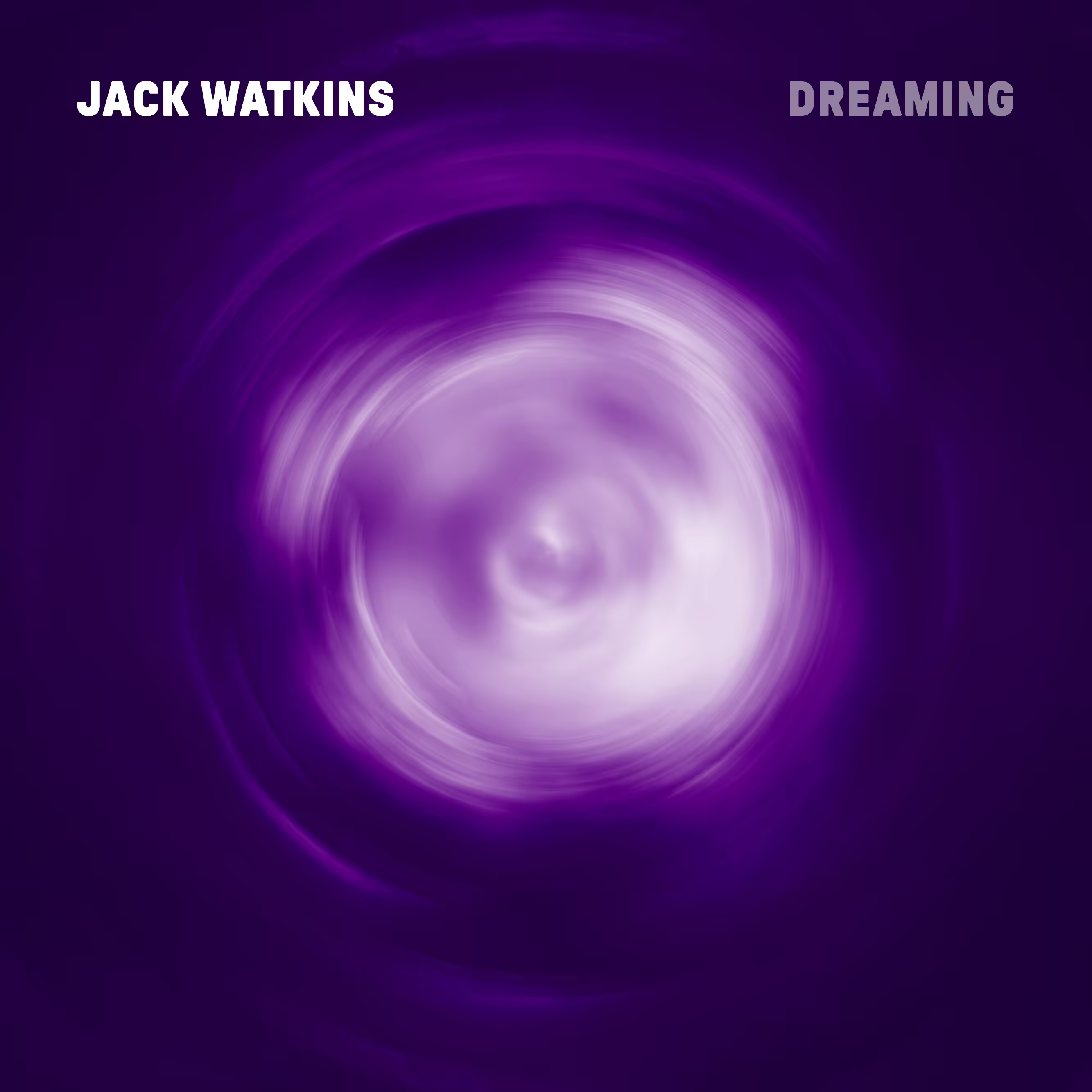
I wrote Dreaming during a period where my inner and outer worlds stopped lining up.
It came from that unsettling feeling of moving through life slightly out of sync — when memories blur, thoughts loop, and it’s hard to tell whether you’re imagining things, remembering them, or quietly avoiding something you don’t yet have the language for. The question at the centre of the song — am I dreaming reality, or running from it? — wasn’t rhetorical. It was something I was genuinely trying to work out.
Lyrically, the song circles the same images again and again: falling without landing, faces flickering, scenes repeating. I wanted it to feel claustrophobic in that way dreams can be — familiar, distorted, and impossible to escape once you’re inside them. Memories appear that don’t quite belong to me, but still carry emotional weight, like echoes borrowed from somewhere else.
Musically, Dreaming unfolds slowly, as if drifting under. The piano motif repeats like a thought you can’t interrupt, while the production gathers momentum around it — swelling, warping, slipping between softness and intensity. When the track finally peaks, it’s meant to feel euphoric and uneasy at the same time. Weightless, but heavy with meaning.
The song ends abruptly, with a sharp intake of breath. Not resolution — awakening.
Dreaming lives in that threshold between sleep and consciousness, imagination and avoidance, clarity and confusion. It’s a snapshot of a mind trying to orient itself — not by finding answers, but by staying with the questions long enough to hear what they’re really asking.